
Wondering what to pack for daycare once your baby is ready to move beyond purées? Here’s what worked for us, how we made the transition without feeling overwhelmed, and the meals, snacks, and products that made this stage so much easier.
At Some Point, Purées Stop Feeling Like Enough
I remember feeling like we had finally gotten into a rhythm with feeding. We had our favorite yogurts, a handful of purées we knew would get eaten, and breakfast before daycare had become predictable. Then, almost without realizing it, we hit another transition.
Our baby was getting older, becoming more interested in feeding herself, and daycare was encouraging us to start sending more table foods. Suddenly I found myself asking a whole new set of questions. What was I actually supposed to pack? How much food was enough? Did every meal need to look like something I’d seen on Instagram? And what happened if she refused to eat any of it?
Looking back, I think I put far more pressure on myself than I needed to. This stage isn’t about replacing purées overnight or packing Pinterest-worthy lunches. It’s about gradually helping your baby become comfortable eating different foods, textures, and meals away from home.
We Didn’t Stop Sending Purées Overnight - and I’m Glad We Didn’t
One of the biggest misconceptions I had was that once babies started eating finger foods, purées were supposed to disappear.
That wasn’t our experience at all.
For quite a while, we packed a combination of both. A lunch might include yogurt, fruit, a homemade pancake, and a few finger foods to practice with. Sometimes there was still a pouch in the bag because I knew it was something familiar that would actually get eaten.
That combination took a lot of pressure off both of us. Instead of feeling like every meal had to be a giant leap forward, it became a gradual transition. Some days she surprised me and ate almost everything I packed. Other days she wanted the yogurt and ignored everything else.
Both days were completely normal.
One Thing I Wish Someone Had Told Me
If your baby doesn’t seem interested in finger foods yet, I want you to know that you’re not alone.
Ours wasn’t.
I kept seeing videos of babies happily eating avocado toast, broccoli florets, and tiny pieces of chicken, and I couldn’t help wondering why ours still seemed to prefer purées. Every time I packed something new, it often came back home untouched.
For a while, I honestly wondered if I had missed some window or if I was doing something wrong.
I wasn’t.
She simply needed more time.
What helped wasn’t forcing new foods or giving up on the familiar ones. We kept offering different textures alongside foods she already liked. Over time, she became curious enough to start trying them, and eventually those little bites turned into real meals.
If you’re in that stage now, don’t let social media convince you that every baby immediately loves finger foods. Some do. Plenty don’t.
Why We Packed Our Own Food Before Switching to the Daycare Menu
One thing that worked really well for our family was continuing to send our own food even though our daycare provides meals.
There was absolutely nothing wrong with the daycare menu. In fact, we knew we’d eventually transition to it. But we decided to take one change at a time.
Learning to eat real food at home is one thing. Learning to eat those same foods in a new environment, with different teachers, different routines, and lots of distractions, is something else entirely.
By packing familiar foods for a few extra weeks, I felt like we were only asking our baby to learn one new thing at a time: eating at school.
Once she became comfortable with that, transitioning to the daycare menu felt much easier.
Looking back, I’d make the same decision again.
What We Actually Packed
Once I stopped trying to build the “perfect” lunch, packing daycare meals became much simpler.
Most days, I tried to include:
- One protein or iron-rich food
- One fruit or vegetable
- One carbohydrate
- One familiar food that I knew she enjoyed
That usually looked something like this:
- Yogurt, homemade pancakes, and strawberries
- Scrambled eggs, blueberries, and toast strips
- Black beans, sweet potato, and fruit
- Cottage cheese, banana, and pancakes
It wasn’t fancy, but it worked.
More importantly, it was realistic enough that I could keep doing it every week.
The Snacks That Finally Got Her Interested in Crunchier Foods
One thing that really helped during this stage was introducing crunchy foods that were easy to hold and fun to explore.
These weren’t meant to replace meals. They were another opportunity to practice different textures without a lot of pressure.
Little Spoon Kale Apple Curls
If I could only recommend one snack from this stage, it would be these.
They quickly became one of our baby’s favorite crunchy foods. They’re light, easy for little hands to hold, and seemed much less intimidating than some of the other finger foods we had been offering.
Even now, they’re still one of our favorite snacks to send to daycare.
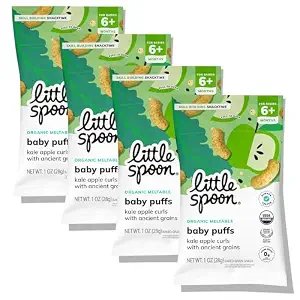
Little Spoon Kale Apple Meltable Baby Puffs
- Organic corn quinoa sorghum
- No added sugar
- No rice
- Encourages self-feeding
Pros: Light and easy to hold, meltable texture is perfect for early eaters, no added sugar. Cons: Small bags go fast. Best for: Babies just starting to explore crunchy textures.
Little Spoon Banana Rings
These were another favorite because they were easy to grab and had a texture that felt different from purées without being too challenging.
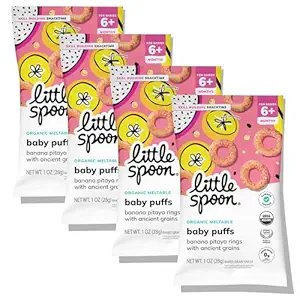
Little Spoon Banana Pitaya Meltable Baby Puffs
- Organic corn quinoa sorghum
- No added sugar
- No rice
- Meltable texture
Pros: Easy for little hands, different texture from purées without being intimidating. Cons: Small bags. Best for: Transitioning babies who need something between purées and crunchier foods.
Little Spoon Blueberry Carrot Wheels
These became part of our regular rotation as well. When our baby was younger, daycare teachers would gently break them up if needed, and they were another great way to introduce new textures.
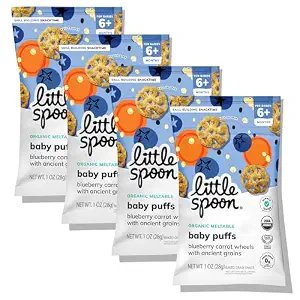
Little Spoon Blueberry Carrot Meltable Baby Wheels
- Organic corn quinoa sorghum
- No added sugar
- Wheel shape easy to hold
- Meltable
Pros: Easy to break up if needed, great for introducing new textures gradually. Cons: Small bags. Best for: Regular daycare snack rotation alongside familiar foods.
Once Upon a Farm Yogurt Melts
These are one of those products that somehow end up everywhere.
We keep them in the diaper bag, my purse, the car, and they almost always make it into the daycare lunch.
They’re an easy, mess-free snack that our toddler still gets excited about.
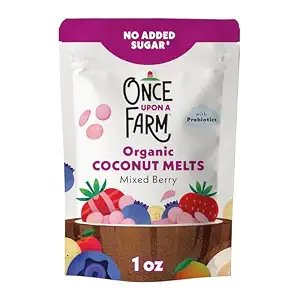
Once Upon a Farm Organic Coconut Melts
- Organic
- Dairy free
- 1oz portable bags
- No mess
Pros: Truly portable, no mess, toddlers love them, easy to keep stashed everywhere. Cons: Goes quickly when they're a fan. Best for: On-the-go snacking and daycare lunch additions.
Happy Baby Organic Teethers
We also used Happy Baby Organics Teether Variety Pack quite a bit early on because they dissolve easily and were a nice bridge between purées and crunchier foods.
As we’ve expanded our snack rotation, we’ve started trying other brands as well, but these were definitely part of our early feeding journey.
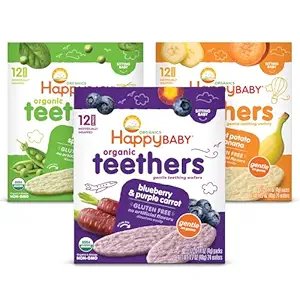
Happy Baby Organics Teether Variety Pack
- Dissolves easily
- Organic
- 3 flavor variety pack
- 12 count per pack
Pros: Dissolves safely, great bridge from purées to crunchier textures, familiar brand. Cons: More of an early stage snack you'll graduate from. Best for: Early finger food practice when baby is just getting started.
The Gear That Made Packing Lunch Easier
One thing I didn’t expect was that once we started sending real food, our daycare bag suddenly felt too small.
Instead of packing mostly bottles, we were now bringing yogurt, fruit, containers, snacks, a straw cup, and an ice pack.
The Lunch Bag We Used
We switched to a larger insulated lunch bag, and it made mornings so much easier.
It held everything comfortably without feeling oversized, and it was the perfect size during that in-between stage when we were still sending all of our own food to daycare.
Once we transitioned to eating more of the daycare’s meals, we didn’t need to pack quite as much, but I’d absolutely buy the same lunch bag again.
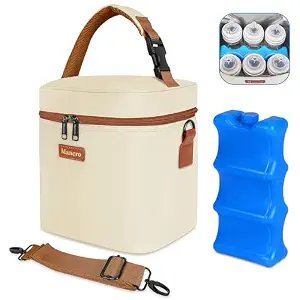
Mancro Insulated Baby Bottle Cooler Bag
- Fits 6 bottles up to 9oz
- Includes ice pack
- Detachable shoulder strap
- Insulated
Pros: Holds everything without feeling oversized, comes with ice pack, shoulder strap is great for drop-off. Cons: More of a bottle bag than a full lunch bag but works perfectly for this stage. Best for: The in-between stage when you're still sending your own food to daycare.
The Moonkie Containers We Use Every Day
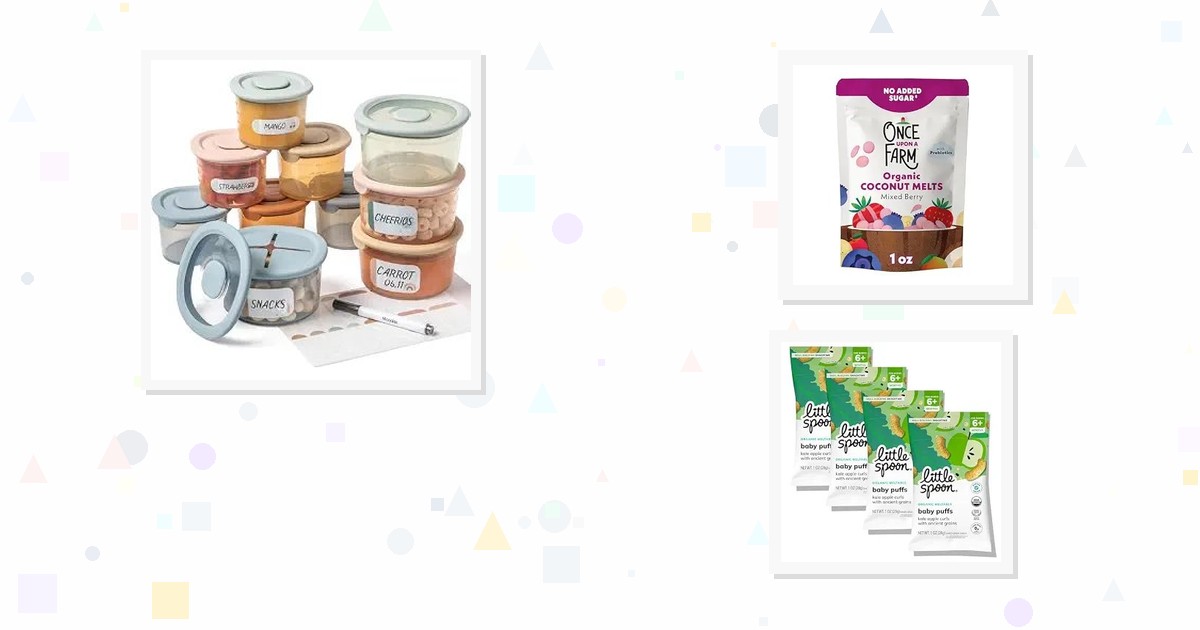
One purchase that completely exceeded my expectations was our set of Moonkie Silicone Baby Food Containers .
Originally, I bought them specifically for daycare lunches.
Now we use them for almost everything.
They come on road trips, flights, picnics, and usually have some sort of snack packed inside whenever we leave the house.
I love that they’re easy to clean, seal well, and are the perfect size for toddler portions. Buying two sets ended up being one of the best decisions because there’s almost always one in the dishwasher and another packed for the next day.
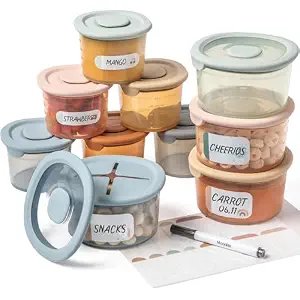
Moonkie Silicone Baby Food Containers
- 8oz and 4oz sizes
- Airtight lids
- Freezer microwave and dishwasher safe
- Silicone
Pros: Seal well, easy to clean, perfect toddler portion sizes, versatile beyond daycare. Cons: Buy two sets - you'll want one clean while one is in the dishwasher. Best for: Everyday daycare lunches and beyond.
Don’t Feel Like You Have to Follow One Feeding Philosophy
If there’s one thing I’ve learned during this stage, it’s that feeding doesn’t have to fit neatly into one category.
You don’t have to choose between purées and finger foods.
You don’t have to commit completely to baby-led weaning.
You don’t have to stop buying pouches the moment your baby picks up a strawberry.
For us, the most successful approach was combining methods. We continued offering familiar foods while gradually introducing new ones, and over time our baby’s confidence grew naturally.
I think that flexibility made this stage much less stressful.
Frequently Asked Questions
What should I pack for daycare once my baby starts eating real food?
Try to include a protein or iron-rich food, a fruit or vegetable, a carbohydrate, and one familiar food your baby already enjoys. Keeping meals simple is often more sustainable than trying to create elaborate lunches every day.
Is it okay to keep sending purées?
Absolutely. We continued packing purées and yogurt while introducing finger foods, and that gradual transition worked really well for our family.
What if my baby refuses finger foods?
That’s more common than you might think. Keep offering different textures alongside foods your baby already enjoys, and try not to pressure them to eat. Every exposure helps, even if they only touch or explore the food.
When should I switch to the daycare menu?
There’s no right answer. We waited until our baby was comfortable eating meals at daycare before making that transition, and that approach helped us feel much more confident.
Looking Back…
Looking back, I wish I had worried less about doing this stage “the right way.”
I spent so much time wondering whether I was sending enough variety, whether I should stop packing purées, or whether my baby should have been eating more finger foods by a certain age. In reality, none of those things happened overnight.
The transition was gradual. Some foods became favorites immediately, while others took weeks of gentle exposure before she showed any interest. What mattered most wasn’t having the perfect lunch packed every morning - it was giving her consistent opportunities to practice.
If you’re in the middle of this stage now, my biggest piece of advice is to be patient. Keep offering a mix of familiar foods and new textures, celebrate the small wins, and remember that every baby gets there on their own timeline.
What Made This Stage Easier
Little Spoon Kale Apple Meltable Baby Puffs
Our favorite crunchy snack for new eaters
Little Spoon Banana Pitaya Meltable Baby Puffs
Easy texture step between purées and crunch
Little Spoon Blueberry Carrot Meltable Baby Wheels
Regular daycare snack rotation pick
Once Upon a Farm Organic Coconut Melts
Mess-free snack that goes everywhere
Happy Baby Organics Teether Variety Pack
Dissolves easily for early finger food practice
Mancro Insulated Baby Bottle Cooler Bag
Holds bottles fruit containers and snacks
Moonkie Silicone Baby Food Containers
Airtight easy-clean containers we use for everything