

Around the 8-week mark, I noticed something on my baby’s scalp that I had never heard of before.
Yellowish flakes. Slightly greasy patches. Almost like thick dandruff.
Cue Google spiral:
- Is cradle cap contagious?
- Did I not wash her hair enough?
- Is this eczema?
- Do I need prescription medicine?
If you’re here because your baby suddenly has flaky patches on their scalp, we were there too.
Here’s exactly what ours looked like, what worked, what didn’t, why it came back once - and how we finally cleared it.
What Cradle Cap Looked Like for Us
Ours showed up right around 8 weeks old.
It looked like:
- Yellow or cream-colored flakes
- Slightly greasy buildup
- Mostly on the top of her scalp
- Not red or inflamed
She wasn’t bothered by it at all.
It looked worse than it was.
First Question: Is Cradle Cap Contagious?
This was my biggest concern.
Cradle cap is not contagious.
It’s a common infant condition (also called seborrheic dermatitis) and is usually linked to:
- Overactive oil glands
- Hormones passed from pregnancy
- Normal skin shedding
It’s not caused by poor hygiene. It’s not something they “caught.” It’s not something you did wrong.
That alone helped me calm down.
What Actually Cleared It for Us
We tried a few gentle things first, but what worked best was a simple system recommended by our pediatrician.
Step 1: Mustela Cradle Cap Cream
We applied the Mustela cradle cap cream a couple hours before bath time.
I would:
- Gently massage it into her scalp
- Let it sit for a few hours
- Rinse it out during her bath
I didn’t leave it on overnight because I was very postpartum-anxious about her rubbing her head and getting it in her eyes. She likely would have been fine, but rinsing before bed made me feel better.
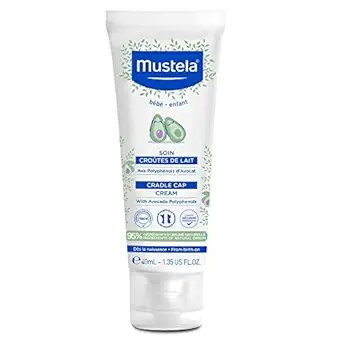
Mustela Cradle Cap Cream for Newborn
- Fragrance-free
- Clinically & dermatologist tested
- Formulated for seborrheic dermatitis
- Safe for newborns
Pros: Gentle, effective at loosening buildup, easy to massage in. Cons: Small bottle goes quickly if you're using it regularly. Best for: Applying a couple hours before bath time to soften flakes before washing.
Step 2: Mustela Foam Shampoo for Newborns
This is the specific Mustela cradle cap shampoo - not their standard baby wash.
During bath, we used this to wash out the cream and gently cleanse her scalp. It’s lightweight, easy to apply, and designed specifically for cradle cap.
Within days, we noticed a visible reduction in flakes.
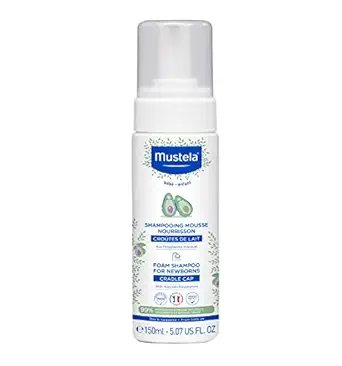
Mustela Foam Shampoo for Newborns
- Fragrance-free
- Avocado oil polyphenols
- Foam formula for easy application
- Designed specifically for cradle cap
Pros: The foam makes it easy to work into the scalp, rinses clean, noticeably different from regular baby wash. Cons: It's a specialty product so you'll go through regular shampoo separately. Best for: Rinsing out the cream during bath and keeping the scalp clean between treatments.
Step 3: Fridababy DermaFrida SkinSoother
We used the Frida silicone brush to gently loosen flakes while washing.
It helped:
- Lift buildup without scraping
- Distribute shampoo evenly
- Massage the scalp gently
We already use this style of brush for regular hair washing, so it wasn’t an extra step - just more intentional.
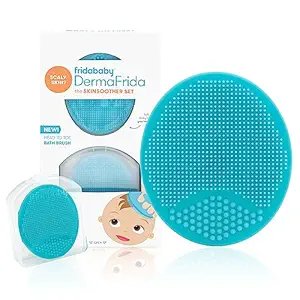
Frida Baby DermaFrida The SkinSoother
- Soft silicone bristles
- Safe for newborns
- Works for eczema and dry skin too
- 2-pack
Pros: Gentle enough for daily use, works the shampoo in really well, feels soothing rather than scratchy. Cons: Requires some coordination with a squirmy baby. Best for: Loosening flakes during wash without over-scrubbing.
How Long It Took to Clear
First round:
- Appeared at 8 weeks
- Improved within days
- Fully cleared within about 1-2 weeks
It was faster than I expected once we had the right routine.
Why It Came Back (And What We Learned)
A couple weeks later, we noticed flakes again.
Not as intense, but definitely back.
We eventually realized something important: cradle cap can linger in brushes.
We had been using a wooden Dr. Brown’s baby brush. After learning that buildup can stay in bristles, we threw it away and replaced it.
We repeated the Mustela cream + cradle cap shampoo routine once more.
After that second round, it cleared again - and we haven’t seen it since.
What We Use Between Washes
If we’re in between baths and I notice dryness or light buildup, we use Mustela No-Rinse Micellar Cleansing Water .
We put it on a soft washcloth and gently wipe her scalp. It’s not a treatment - just a light refresh - but it helps maintain a clean scalp between full washes.
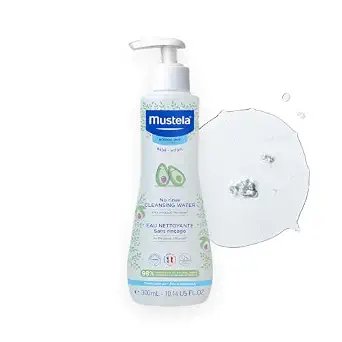
Mustela No-Rinse Micellar Cleansing Water
- No rinse needed
- Natural avocado perseose & aloe vera
- Gentle for daily use
- Works on face
- hands
- and scalp
Pros: No rinsing required, doesn't disrupt the scalp, works for multiple uses beyond cradle cap. Cons: Not a treatment on its own. Best for: Keeping things calm between baths without adding more washing to the routine.
What We Avoided
We did not:
- Pick at flakes
- Scrub aggressively
- Use adult dandruff shampoo
- Overwash
Gentle and consistent worked best.
When to Call the Doctor
Check with your pediatrician if:
- The scalp becomes red or inflamed
- It spreads and looks irritated (eyebrows, behind ears)
- It seems painful
- You’re unsure whether it’s eczema
For us, this was straightforward cradle cap and responded well to topical care.
Final Thoughts
Cradle cap can look alarming if you’ve never seen it before.
Ours appeared at 8 weeks, cleared within 1-2 weeks, came back once, and hasn’t returned since replacing our brush.
What worked for us:
- Mustela cradle cap cream
- Mustela Foam Shampoo for Newborns
- Frida silicone brush
- Replacing old brushes
- Patience
What We Used for Cradle Cap
Mustela Cradle Cap Cream for Newborn
Apply before bath to loosen buildup
Mustela Foam Shampoo for Newborns
Rinse out the cream and cleanse the scalp
Frida Baby DermaFrida The SkinSoother
Gently lift flakes during washing
Mustela No-Rinse Micellar Cleansing Water
Maintain a clean scalp between baths
If you’re dealing with cradle cap right now, you’re not alone. It’s common, it’s not contagious, and it’s usually temporary.